8 Steps for Leveling a Billiards Game Table

A perfectly level billiards table transforms casual games into serious competitions. Proper leveling ensures accurate ball roll and fair play. Without it, even the most skilled players will struggle with inconsistent shots and frustrating gameplay.
Leveling a billiards table isn’t as daunting as it sounds. With the right tools and approach, you can achieve professional-grade results in your own game room. This guide will walk you through each step to help you create the ideal playing surface.
Why Table Leveling Matters
An unlevel table creates subtle slopes that dramatically affect ball movement. What looks like a straight shot might curve unexpectedly, and gentle rolls can accelerate or stall based on imperceptible tilts. These inconsistencies can frustrate players and undermine the strategic elements that make billiards enjoyable.
Proper leveling also protects your investment. Uneven weight distribution stresses the table’s frame and slate, potentially causing warping or cracking over time. Regular leveling checks preserve your table’s structural integrity and maintain its value for years to come.
Tools You’ll Need
Before starting, gather these essential items:
- A carpenter’s level of at least 24 inches long
- Leveling shims (plastic or composite materials work best)
- An adjustable wrench or socket set
- A rubber mallet, for gentle adjustments
- A measuring tape
- A pencil for marking
Most billiards tables feature adjustable leg levelers, which simplify the process considerably. Check your table’s construction before getting started to know which adjustment method you’ll need to use.
Step 1: Clear the Playing Surface
Remove all balls, racks, cues, and accessories from the table. Even small objects can interfere with your readings and create false measurements. Brush the felt to remove any chalk dust and debris that might affect the level’s accuracy.
Ensure that the room itself is at a stable temperature. Extreme heat or cold can cause minor expansions or contractions in the table materials, affecting your measurements.
Step 2: Check the Floor
Your table can only be as level as the floor beneath it. Place your carpenter’s level directly on the floor where each leg rests. Note any variations, as you’ll need to compensate for floor irregularities during the leveling process.
Concrete floors typically offer the most stability, while wood floors may have slight variations. If your floor has significant slopes or soft spots, consider placing a sturdy platform beneath the table for better stability.
Step 3: Measure the Length
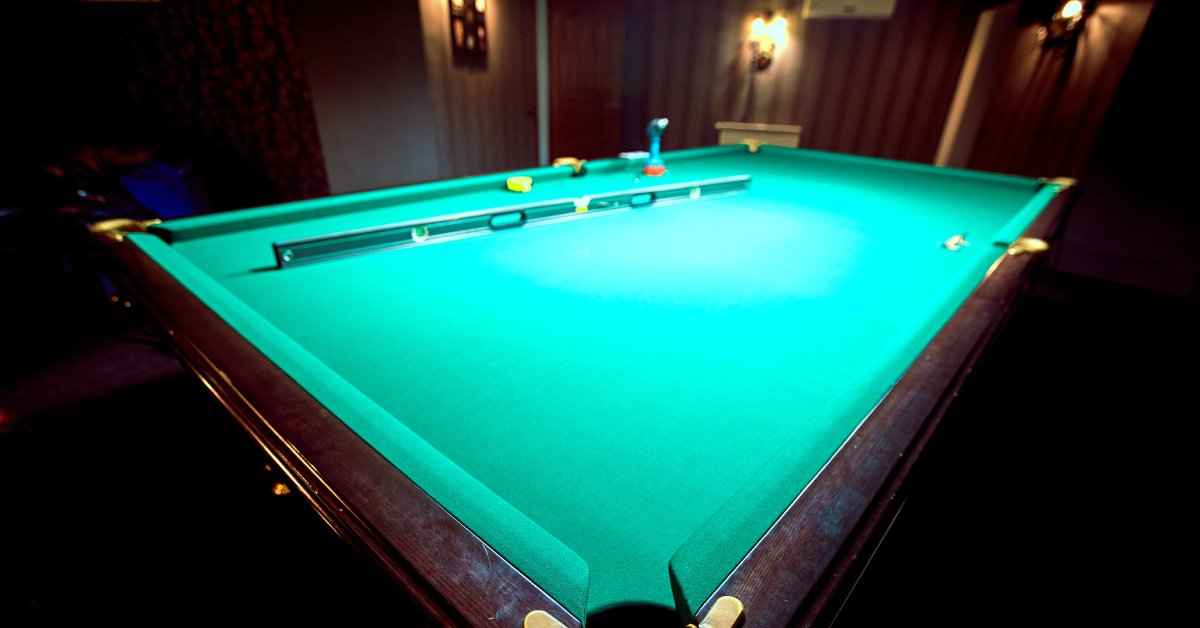
Place your level lengthwise across the center of the playing surface, running from headrail to footrail. The bubble should rest perfectly in the center of the guide lines. If it tilts toward either end, you’ll need to adjust the legs on the lower side.
Take multiple readings along the length of the table, moving the level to different positions. This will help you identify if the entire table is tilting or if there’s warping in specific areas.
Step 4: Adjust the Leg Levelers
Most quality tables feature adjustable leg levelers. These threaded feet screw in or out to raise or lower each corner independently.
To raise a corner, turn the leveler counterclockwise. To lower it, turn it clockwise. Make small adjustments—usually no more than a quarter turn at a time. After each adjustment, recheck with your level before making any additional changes.
If your table lacks adjustable levelers, place shims beneath the legs that need raising. Stack shims carefully to avoid creating unstable points that might shift over time.
Step 5: Check Width Measurements
Once the length is level, place your carpenter’s level across the width of the table, perpendicular to your first measurements. Start at the headrail, move to the center, and finally check the footrail.
The process remains the same: identify which side sits lower, and then adjust the corresponding leg levelers. Width adjustments often affect length measurements slightly, so be prepared to fine-tune multiple times.
Step 6: Verify Diagonal Readings
After achieving level readings both lengthwise and widthwise, check the diagonals. Place your level from corner to corner of the table in an X pattern. This catches any twisting in the table frame that straight measurements might miss.
Diagonal measurements should also show centered bubbles in your level. If they don’t, you may have over-adjusted one corner. Return to the problematic area and make minor corrections.
Step 7: Test With Ball Roll
Place a ball at the center of the table and give it a gentle push. On a properly leveled table, it should roll predictably without curving. Try this test in multiple directions, toward each pocket and along the rails.
If the ball consistently drifts toward one area, that section likely sits slightly lower than the rest of the table. Make fine adjustments and retest until the ball’s behavior meets your expectations.
Step 8: Final Verification
Conduct one final, complete round of measurements: length, width, and both diagonals. Document any remaining variations. Professional installers aim for tolerances within 1/16 inch across the entire playing surface. If you’re satisfied with the results, tighten any locking nuts on the leg levelers to prevent accidental adjustments during gameplay.
Maintenance and Regular Checks
Tables don’t stay level forever. Seasonal humidity changes, floor settling, and regular play can gradually shift things back out of alignment. Check your table’s level every three to six months or whenever you notice unusual ball behavior.
Keep your leveling tools accessible for quick adjustments. A five-minute check can save hours of frustration during game nights and protect your table’s long-term condition.
When To Call a Professional
Some situations warrant expert help. If your table has a three-piece slate bed that appears misaligned at the seams, professional installers have specialized tools to properly adjust the slate without damaging it. Similarly, if your floor has significant irregularities or structural issues, a professional can recommend solutions such as a custom platform or strategic shimming.
Most reputable dealers who sell premium tables offer leveling services as part of delivery and installation. Take advantage of this expertise, especially if you’re setting up a new table for the first time.
Enjoy Perfect Play

A properly leveled billiards table can transform your game room into a space where skill truly shines. Every shot will roll true, every bank angle will calculate perfectly, and strategic play will flourish without any frustrating inconsistencies. Whether you’re enjoying family game nights or hosting competitive matches with friends, the effort you invest in proper leveling will pay dividends in enjoyment and fair play.
Elevate your home entertainment experience today—explore our high-quality, customizable Olhausen billiard tables for sale, designed to enhance family fun and bring professional-level play to your space.